
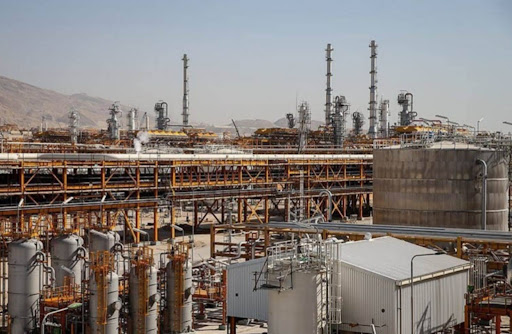
Iran’s Gulf energy strike threat demanded an immediate global response on Wednesday after the Revolutionary Guards announced imminent strikes against facilities in Saudi Arabia, the UAE, and Qatar following an Israeli attack on the South Pars gasfield. Specific targets were named and evacuation orders issued. Oil prices surged toward $110 a barrel as the demand for a global response became impossible to ignore by governments, international organizations, and energy institutions worldwide.
South Pars, the world’s largest natural gas reserve, is shared between Iran and Qatar and fundamental to Iran’s energy economy. The Israeli attack — reportedly with US backing — was unprecedented in its direct targeting of Iranian fossil fuel production. Both countries had previously avoided this step, but crossing it triggered Iran’s most specific and credible energy strike threat of the entire war — one that demanded a global response of equivalent urgency.
Iran’s state media named Saudi Arabia’s Samref refinery and Jubail complex, the UAE’s al-Hosn gasfield, and Qatar’s Mesaieed and Ras Laffan facilities as targets. All workers and residents were told to evacuate without delay. Asaluyeh governor Eskandar Pasalar condemned the US-Israeli escalation as “political suicide” and declared the conflict had entered a full-scale economic war.
Brent crude rose nearly 5% to $108.60 per barrel, while European gas benchmarks climbed more than 7.5% to above €55.50 per megawatt hour. Gulf oil exports had already been reduced by 60% from pre-war volumes due to sustained infrastructure attacks and Iran’s Strait of Hormuz blockade. Iran had continued to export its own crude through the strait while blocking Gulf neighbors from doing so — a strategic asymmetry that had persisted throughout the conflict and now threatened to be dramatically extended.
Qatar’s government spokesperson Majid al-Ansari warned that targeting energy infrastructure was a direct threat to global energy security, the environment, and millions of regional residents. The global response that Iran’s strike threat demanded was not optional — it was essential. The world’s governments, international energy agencies, and diplomatic institutions were being called to act with a speed and coordination that the gravity of the crisis demanded. Whether they could deliver remained to be seen.