
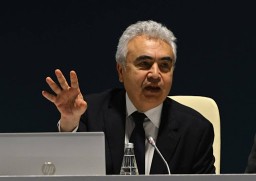
The Iran energy crisis has provided the most powerful argument yet for accelerating rather than slowing the global energy transition away from fossil fuel dependence, the head of the International Energy Agency has argued. Fatih Birol, speaking in Canberra, said the crisis — equivalent in force to the combined 1970s twin oil shocks and the Ukraine gas emergency — had demonstrated once more that fossil fuel supply chains from geopolitically unstable regions carried catastrophic economic risks. He said clean energy development was not just an environmental imperative but the most effective long-term strategy for global energy security.
Birol acknowledged the apparent tension between the immediate need to maximize fossil fuel production to address the current supply crisis and the long-term imperative to reduce fossil fuel dependence. He said both were necessary — the immediate crisis demanded every available barrel of oil and cubic metre of gas from stable producers, while the long-term response demanded accelerated investment in renewable energy, nuclear power, and energy efficiency to reduce the world’s vulnerability to future supply disruptions.
The conflict began February 28 with US and Israeli strikes on Iran and has since removed 11 million barrels of oil per day and 140 billion cubic metres of gas from world markets. At least 40 Gulf energy assets have been severely damaged, and the Hormuz strait — through which approximately 20 percent of global oil flows — remains closed. The IEA deployed 400 million barrels from strategic reserves on March 11 in its largest emergency action.
Birol confirmed further releases were under consideration and said the IEA was consulting with governments across three continents. He called for demand-side policies including remote work, lower speed limits, and reduced commercial aviation — measures that happened to reduce both energy consumption and carbon emissions simultaneously. He met with Australian Prime Minister Anthony Albanese and said Australia’s renewable energy potential made it a natural leader in both the immediate crisis response and the long-term transition.
Trump’s 48-hour ultimatum to Iran to reopen the strait expired without result, and Tehran threatened retaliatory strikes on US and allied energy and water infrastructure. Birol concluded that the Iran crisis should not be used as an argument for slowing the energy transition by those who preferred to maintain fossil fuel dependence. He said precisely the opposite conclusion was warranted — and that the devastating consequences of the current crisis made the case for clean energy acceleration more compellingly than any previous event in energy history.