
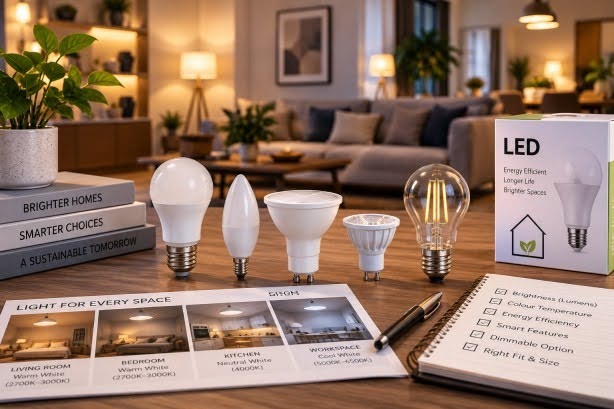
LED bulbs continue to be a favored option for lighting in homes and offices, thanks to their low energy usage and long lifespan. As manufacturers broaden their selections, consumers now have a greater variety of choices regarding brightness, color temperature, bulb shape, connectivity, and efficiency. When picking an LED bulb, it’s crucial to consider more than just the price or brand; the choice should be tailored to the room, fixture, desired brightness, and type of lighting needed.
Brightness, measured in lumens, is the primary specification to evaluate, as it offers a more accurate gauge of light output than wattage, which was the standard for older bulb types. A general-purpose bulb providing 800 to 1,000 lumens is usually adequate, although the optimal brightness level is contingent on room size and whether the lighting is for ambient, task, or accent purposes. Compatibility with the fixture and its maximum rated wattage is also important. Additionally, color temperature, measured in Kelvin, influences the light’s appearance, with warmer tones (2700K–3000K) being ideal for relaxation areas, and cooler tones (4000K–5000K) fitting for kitchens and workspaces where clear task lighting is necessary.
Energy efficiency remains a key reason for the transition from incandescent bulbs to LEDs, as LEDs offer substantial reductions in electricity use and heat generation for comparable illumination levels. The actual savings depend on several factors, including the bulb’s wattage, daily usage, electricity costs, and the technology it replaces. Hence, consumers should focus on rated wattage and expected lifespan instead of relying solely on general savings claims. LED bulbs typically outlast incandescent ones, but lifespan can vary based on heat management, electrical conditions, usage patterns, and product quality. Bulbs in enclosed fixtures might experience faster wear due to increased heat.
Light quality and flicker are additional considerations when selecting LED bulbs, especially in spaces where people spend significant amounts of time, like bedrooms and offices. Specifications such as color rendering and flicker performance can guide consumers, as some LED products may flicker depending on electronics, dimmer compatibility, or electrical conditions. For color-critical applications, a higher color-rendering index might be beneficial. Different rooms require different lighting needs: warm lighting suits bedrooms, living rooms can benefit from layered lighting, kitchens need bright and cooler lighting for tasks, and home offices require adequate brightness and suitable color temperatures for focused work. Bathrooms demand moisture-compatible products.
Consumers interested in smart home integration might opt for smart LED bulbs with Wi-Fi or Bluetooth capabilities, which offer features like app control, scheduling, dimming, and color adjustments. While smart features are appealing, they can raise costs, and users seeking simple on/off functionality might not require them. Brand or price should not be the sole decision-makers, as a higher price does not guarantee better performance. Instead, consumers should compare technical specifications such as lumen output, wattage, color temperature, lifespan, and fixture compatibility. Through careful evaluation and consideration of practical needs, homeowners can choose LED bulbs that provide the desired lighting without incurring unnecessary expenses.
Legal Disclaimer: The information contained in this article has been provided by independent third-party contributors, clients, or content partners. We do not independently verify the accuracy, completeness, legality, ownership, licensing, or reliability of submitted content, including text, images, videos, trademarks, or other media materials. The submitting party is solely responsible for ensuring that all content, including images and media assets, complies with applicable copyright, trademark, licensing, and intellectual property laws. We disclaim liability for any unauthorized use of copyrighted or proprietary materials by third parties. If you believe that any content published on this platform infringes your intellectual property rights, kindly contact the author above for prompt review and resolution.