
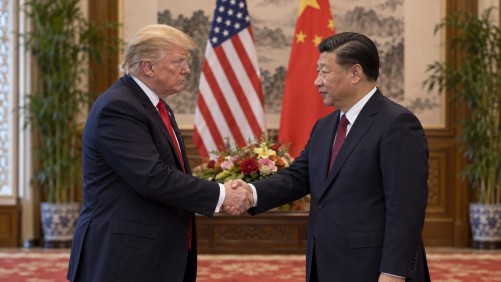
The upcoming meeting between U.S. President Donald Trump and Chinese President Xi Jinping in the United States is poised to impact global trade dynamics, technology exchanges, and security discussions. As the two largest economies grapple with disagreements on trade, technology, and geopolitical issues, the outcomes of this meeting could shape the future of international relations.
Central to the discussions will be the contentious topic of artificial intelligence (AI), where both nations have starkly different approaches and priorities. The United States has proposed establishing a communication mechanism with China to ensure AI safety and governance. However, differences persist, especially as the U.S. continues to restrict China’s access to advanced semiconductors critical for AI development, while China accuses the U.S. of hindering its technological advancement.
Trade relations are another crucial aspect of the meeting, with a temporary trade agreement, including tariffs and restrictions on Chinese rare-earth exports, set to expire in November. China seeks longer-term stability in its trade relations with the U.S., while the U.S. leverages trade restrictions in negotiations. The expiration of these agreements could have significant implications for both economies and global markets.
The sensitive issue of Taiwan is expected to feature prominently in the discussions. The U.S. maintains strong defense ties with Taiwan, a stance that China opposes as it views the island as part of its territory. Future U.S. arms sales to Taiwan could further strain relations, making this a critical point of negotiation between Trump and Xi.
Beyond bilateral issues, the leaders are anticipated to discuss broader international concerns, such as the conflicts involving Iran and Ukraine. China’s economic ties with Iran and its relationship with Russia add layers of complexity to these discussions. The meeting underscores the ongoing strategic rivalry between the U.S. and China, with both nations seeking to manage their competition while maintaining open lines of communication on issues affecting global trade, technology, and security.