
The appointment of Mojtaba Khamenei as Iran’s new supreme leader is not merely a political succession — it is a redefinition of what the Islamic Republic has become. When the Assembly of Experts confirmed Mojtaba’s appointment on Sunday, it completed a transfer of power that would have been unthinkable to the founders of the revolution. A state created explicitly to overthrow hereditary rule has now handed its supreme office from parent to child, aligning itself — however reluctantly — with the dynastic logic it spent decades condemning.
Mojtaba, 56, was born in Mashhad and educated in the theological academies of Qom. He spent his career as a power broker within his father’s government rather than a public figure in his own right. His alliances with IRGC commanders and hardline clerics built over decades gave him the institutional backing that the Assembly needed. Whether those qualifications make him a suitable supreme leader in the religious sense intended by the constitution — the most qualified jurist, chosen on merit — is a question the appointment leaves conspicuously unresolved.
The institutional endorsements were rapid and comprehensive. The IRGC, armed forces, parliament, and security apparatus all declared their loyalty. Ali Larijani praised Mojtaba’s leadership capacity. Yemen’s Houthis congratulated him. State media broadcast coordinated coverage of institutional unity. The regime worked hard to present the appointment as a strong, deliberate decision rather than a crisis response — but the very speed and uniformity of the endorsements suggested it was at least partially both.
Israel launched new strikes on Iranian infrastructure on Monday. Iran struck five Gulf states, killing civilians in Saudi Arabia and damaging Bahrain’s desalination plant. Oil markets rose on IRGC threats. The United States pledged not to target Iranian energy infrastructure. Trump issued warnings about Mojtaba’s durability. The conflict continued to develop with no sign of abating on any front.
The redefinition of the Islamic Republic that Mojtaba Khamenei’s appointment represents may prove to be a turning point — either the beginning of a more entrenched autocratic system or a moment that eventually provokes significant internal resistance. Iranians have a long memory for political symbolism, and the symbolism of this transition — power passed by blood, in a republic founded against blood-based rule — will not be easily forgotten. Whether it ultimately matters depends on what the new supreme leader does with the office he has inherited.
Iran’s Supreme Leadership Passes to Mojtaba: A Transfer That Redefines the Republic
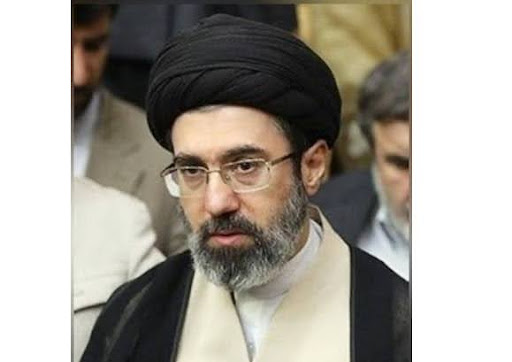
Picture Credit: Mahmoud Hosseini / Tasnim News Agency via Wikimedia Commons
37