
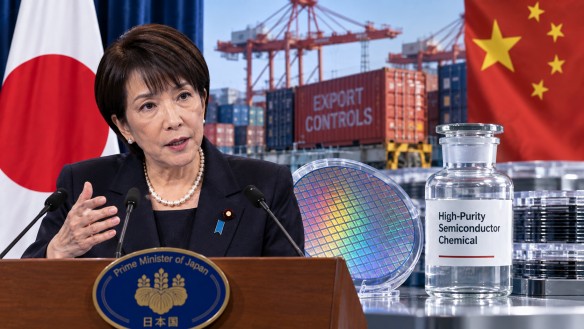
Japan has expressed concern over China’s recent decision to impose stringent export restrictions on dichlorosilane (DCS), a critical chemical in semiconductor production. The new measures mandate Chinese importers to provide cash deposits of up to 99.2% for DCS imported from Japan. This development is particularly impactful for Japanese companies such as Shin-Etsu Chemical and Denal Silane, which are key exporters of this chemical.
According to China, these restrictions are temporary and a result of an anti-dumping investigation. The investigation concluded that Japanese exports of DCS have adversely affected China’s domestic industry. While the measures are currently provisional, a definitive decision will be made once the investigation concludes. Japan’s government is currently assessing the ramifications for its businesses and has urged China to avoid causing undue harm to Japanese companies, indicating readiness to take necessary actions if the situation warrants.
This trade development unfolds against a backdrop of deteriorating relations between China and Japan, exacerbated by Japan’s stance on Taiwan. In addition to the DCS restrictions, Beijing has imposed other trade and export limitations affecting Japanese firms and products that could have dual civilian and military uses.
Given Japan’s status as a leading global producer of ultrapure DCS, the imposed restrictions could have significant ripple effects on the semiconductor supply chain. DCS plays a vital role in the semiconductor industry by enabling the formation of extremely thin silicon and other material layers on computer chips, underscoring the importance of the chemical in high-tech manufacturing processes.