
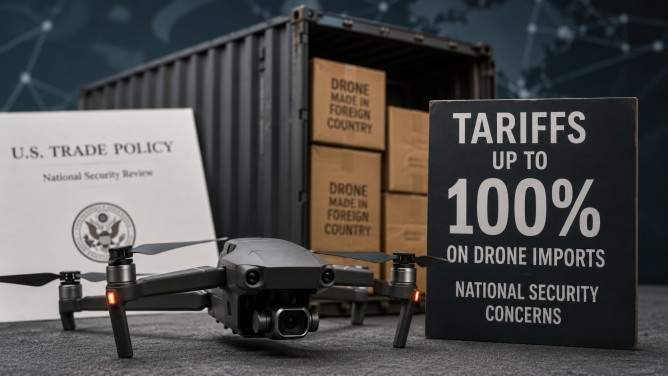
The United States has unveiled a new tariff policy targeting certain drones and their components, citing concerns over national security and the reliance on foreign supply chains primarily controlled by China. This strategic move, effective from September 3, seeks to impose tariffs of up to 100% on unmanned aircraft systems, particularly those weighing over 25 kilograms and equipped with advanced features like thermal cameras and docking stations. In contrast, smaller drones will incur a 25% tariff.
In a broader application of this policy, the U.S. will also levy tariffs on drone products and components from several key trading partners. Items originating from the European Union, Japan, Liechtenstein, South Korea, Switzerland, and Taiwan will see a 15% tariff, while imports from the United Kingdom will face a 10% tariff, provided the technology originates from these countries or the U.S.
The White House has emphasized that these measures are designed to bolster the U.S. defense and industrial base, fostering domestic drone manufacturing and job creation, while diminishing dependence on international suppliers. This initiative comes as China, with Shenzhen-based DJI leading the charge, maintains a dominant position in the global drone market and has been subject to U.S. scrutiny over potential national security threats.
U.S. officials have consistently raised alarms about the risks posed by foreign-made drones, including issues of surveillance, data security, and potential for malicious activities. The Federal Communications Commission has previously advocated for enhanced domestic production to mitigate these risks. This tariff announcement is the latest development in the ongoing trade and technology tensions between the U.S. and China.
These tensions have seen China implement its own restrictions on drone exports to the U.S., alongside actions affecting several American companies. The unfolding situation underscores the intricate and often contentious landscape of international trade and technological dependencies.