
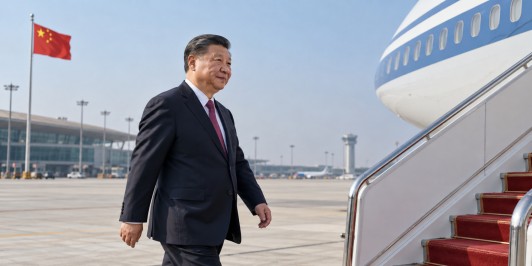
The arrival of Chinese President Xi Jinping in the United States signifies a pivotal moment in ongoing discussions between the world’s two largest economies, impacting trade, economic relations, and broader bilateral issues. As tensions and negotiations continue to shape international markets, this visit could lead to significant developments affecting global economic stability.
President Xi, accompanied by his wife Peng Liyuan, as well as senior Chinese officials, departed Beijing on Wednesday following an invitation from U.S. President Donald Trump. Among the delegation are key figures such as Cai Qi, a member of the Political Bureau Standing Committee of the Communist Party of China, and Wang Yi, China’s foreign minister and a Political Bureau member.
This state visit underscores the importance both nations place on their economic relationship, which has seen its share of challenges and opportunities in recent years. With trade disputes and tariffs affecting industries on both sides, the discussions during this visit are anticipated to address these pressing concerns and could lead to adjustments in trade policies.
Beyond trade, the bilateral talks are expected to cover a range of issues, including technology transfer, intellectual property rights, and regional security matters. As global economies remain interconnected, the outcomes of these discussions could have far-reaching implications beyond just the U.S. and China.
As President Xi and his delegation engage in talks with U.S. counterparts, observers worldwide are keenly watching for any shifts in policies or new agreements that could redefine economic and diplomatic ties between the two nations.