
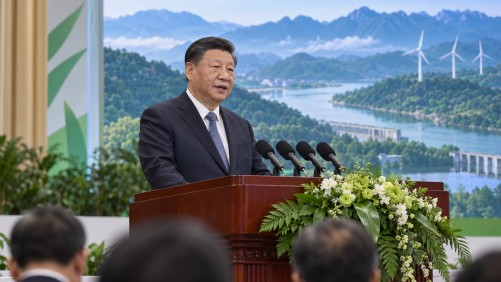
Chinese President Xi Jinping has emphasized the need for stronger ecological conservation and sustainable green development during a recent visit to Ulanqab in the Inner Mongolia region. His remarks highlighted the importance of wetland restoration, biodiversity protection, and environmentally friendly computing infrastructure as key components of China’s environmental agenda.
During his inspection at the Huangqihai Lake nature reserve, Xi reviewed conservation efforts that have successfully restored and expanded the lake’s water body, which was previously at risk of drying up due to climate and other pressures. He called for the rigorous implementation of China’s wetland protection law and stressed the importance of safeguarding biodiversity and maintaining strict ecological protection boundaries. Xi advocated for prioritizing natural restoration in degraded wetlands, supplemented by scientific intervention when necessary.
In addition to ecological conservation, Xi also focused on technological development during his visit to the Chahar High-Tech Development Zone. He assessed the progress of China’s “East Data, West Computing” initiative, designed to optimize the distribution of computing resources across the nation. Xi underscored the need for efficient, environmentally friendly, and safe computing infrastructure, which he sees as essential for strengthening China’s digital economy and supporting sustainable development.
Furthermore, Xi reviewed local agricultural and livestock products, encouraging officials to improve the connection between production and markets. He urged them to take measures that would increase the incomes of farmers and herders, thus supporting the economic well-being of local communities.
Xi’s visit to Inner Mongolia underscores the Chinese government’s commitment to addressing environmental and technological challenges as part of its broader strategy for sustainable development. His directives highlight the intertwined nature of ecological preservation and technological advancement in achieving long-term national goals.