
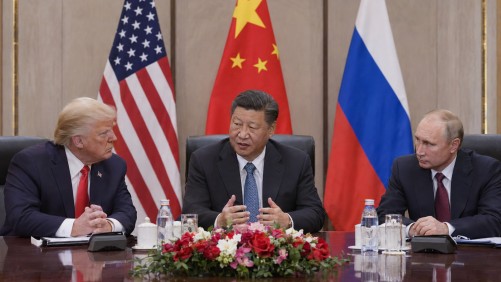
In a significant diplomatic development, China has confirmed that President Xi Jinping will host the first trilateral summit with U.S. President Donald Trump and Russian President Vladimir Putin. Scheduled for November 19 in Shenzhen, this meeting coincides with the Asia-Pacific Economic Cooperation (APEC) summit.
The summit marks a pivotal moment in international relations, with expectations that discussions will focus on nuclear arms reduction and the ongoing conflict involving Iran. While China has not publicly detailed the agenda, these topics are anticipated to take precedence given the current global security landscape.
Despite the opportunity for broad-ranging discussions, the Ukraine war is notably absent from the proposed agenda. China views this conflict as a European issue, suggesting that it falls outside the immediate purview of the trilateral talks. This position underscores China’s strategic stance in maintaining a degree of separation from European territorial disputes.
China’s role as host highlights its growing influence on the global stage, particularly in facilitating discussions between the world’s leading nuclear powers. The summit could serve as a platform for China to advocate for its stance that the U.S. and Russia should first reduce their nuclear arsenals before Beijing engages in negotiations concerning its own nuclear capabilities.
As the international community anticipates the outcomes of this landmark meeting, the convergence of these three leaders in Shenzhen underscores the complex dynamics of contemporary global diplomacy. The summit represents not only a diplomatic engagement but also a potential turning point in addressing some of the world’s most pressing security challenges.