
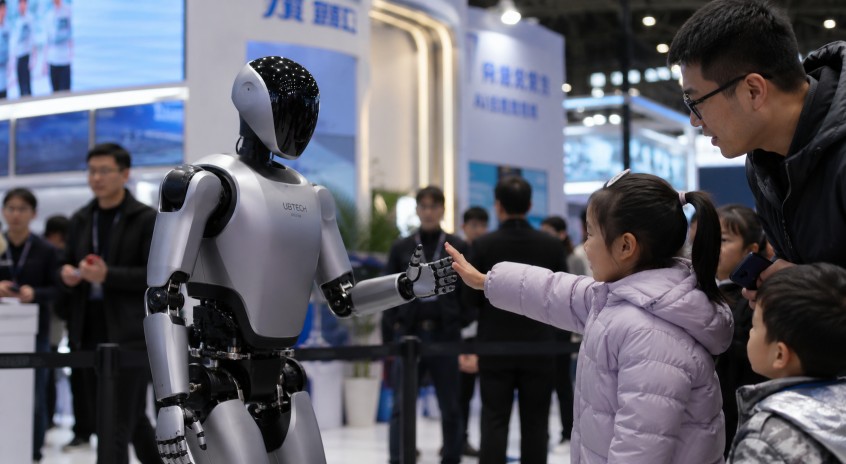
Over the last twenty years, China’s robotics industry has witnessed a significant evolution, transitioning from basic remote-controlled gadgets to sophisticated machines capable of autonomous operations and real-world collaboration. This transformation began in 2007 with the introduction of the i-Sobot, a compact robot designed in Dongguan, Guangdong Province. Despite its small stature, the i-Sobot was notable for executing around 240 distinct movements, including walking and climbing, marking an early achievement in China’s journey towards intelligent robotics.
Initially an experimental endeavor, China’s robotics sector has since blossomed into a booming industry. Today’s robots in China are now imbued with artificial intelligence, which allows them to understand their environment, make independent decisions, and collaborate with humans across various settings. This advancement in robotics technology signifies a broader trend of integrating intelligent machines into everyday life, extending beyond the confines of research labs.
These advanced robots are increasingly being utilized in numerous sectors, including manufacturing, logistics, healthcare, and public services, as well as in daily activities. Their expanding capabilities align with China’s strategic focus on fostering “new quality productive forces,” an economic initiative aimed at enhancing technological innovation, boosting productivity, and achieving high-quality industrial growth.
The swift advancement of the robotics industry underscores China’s growing commitment to investing in cutting-edge technologies. By embedding intelligent automation across different industries, robots are becoming a crucial component of both daily life and the nation’s future economic development. This integration reflects China’s ambition to harness technology for improved productivity and industrial excellence.