
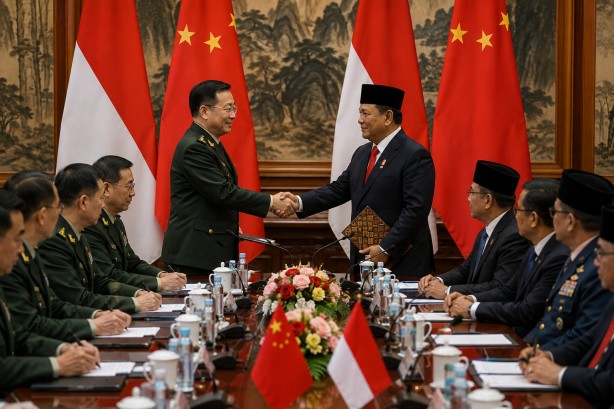
The second edition of the China-Indonesia Joint Foreign and Defense Ministerial Dialogue, known as the 2+2 mechanism, represents a significant stride towards enhancing political and security ties between the two nations. This dialogue is focused on fostering regular communication and extending cooperation across various domains such as defense, technology, maritime security, cybersecurity, and crisis management. For Indonesia, this partnership with China holds promise for modernizing its defense capabilities and bolstering its industrial and technological sectors.
During these discussions, both countries have explored potential collaborations in areas like defense manufacturing, technology transfer, and the provision of military equipment. Such cooperation could help Indonesia diversify its international alliances while preserving its strategic autonomy, with an emphasis on strengthening domestic capabilities instead of increasing reliance on any single foreign partner.
Maritime cooperation emerges as another critical area of focus, especially as Indonesia and China navigate differing interests and stances on regional issues. By maintaining regular communication, both nations aim to mitigate misunderstandings and promote greater stability in the region. The 2+2 mechanism, therefore, could have broader implications for Southeast Asia, given the influential roles both countries play in the region’s political, economic, and security dynamics.
The long-term success of this dialogue will be contingent upon whether the agreements reached translate into tangible progress in defense capability enhancement, industrial growth, maritime collaboration, and regional security stability. As these ambitious plans unfold, the outcomes could potentially reshape the geopolitical landscape of Southeast Asia, reinforcing the strategic importance of the China-Indonesia partnership.