
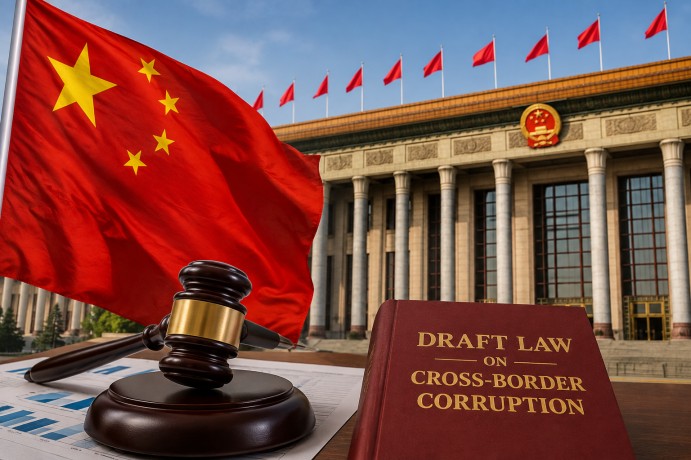
China’s National People’s Congress Standing Committee is gearing up to review a significant draft law focused on tackling cross-border corruption. Set for examination during the session from August 25 to 28, this proposed legislation aims to enhance China’s anti-corruption strategies and boost international collaboration in tracking down corrupt officials and fugitives who have sought refuge overseas. This initiative has been earmarked as a crucial legislative project for the current term of the NPC and is recognized as one of the key legislative priorities for 2026.
The move represents a step forward in China’s efforts to address corruption on a global scale. Authorities have been increasingly active in their pursuit of former officials accused of corruption who have escaped the country, with the top anti-corruption agency reporting the repatriation of 963 such fugitives in 2025 alone. This legislative push aligns with China’s broader agenda of tightening its grip on corruption and ensuring that those guilty face justice, regardless of their current location.
During this session, lawmakers are not only focusing on corruption-related measures but will also delve into a variety of other critical legislative areas. Draft legislation and amendments concerning healthcare security, farmland protection, agriculture, national defense mobilization, banking regulation, water management, and road traffic safety are all slated for review. These discussions underscore the diverse range of issues that the Chinese legislature is addressing to ensure comprehensive national governance.
The introduction of this anti-corruption law reflects a strategic commitment by China to solidify its legal framework against corruption, particularly in an era of increasing globalization where financial crimes often transcend borders. By prioritizing this legislation, China is signaling its dedication to fortifying international cooperation in law enforcement and closing legal loopholes that fugitives might exploit.
As the session progresses, the outcomes of these reviews could have far-reaching implications, not only within China but also on a global scale, as nations collaborate more closely to combat corruption. The developments discussed in this legislative session will likely play a crucial role in shaping China’s legal landscape and its approach to international legal cooperation in the coming years.