
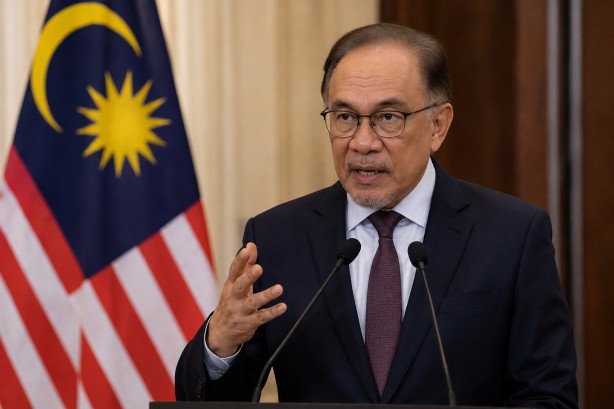
In a recent statement, Malaysian Prime Minister Anwar Ibrahim reaffirmed Kuala Lumpur’s commitment to the One China policy by expressing his view that Taiwan is part of China. Anwar’s comments have been met with approval from Beijing, while drawing criticism from Taipei. Despite these reactions, he emphasized Malaysia’s ongoing support for a peaceful resolution to tensions across the Taiwan Strait.
Malaysia’s adherence to the One China policy dates back to 1974, when diplomatic relations with Beijing were first established. The policy involves recognizing the People’s Republic of China as the sole legal government of China and acknowledging its stance on Taiwan. However, Malaysia also highlights the importance of maintaining peace and stability across the Taiwan Strait.
Beijing has welcomed Anwar’s statement, viewing it as aligned with its position on Taiwan. Conversely, Taiwan has rejected these remarks, asserting its status as a separate entity from China. Taipei has also cautioned that such statements supporting Beijing’s perspective might heighten concerns regarding military pressure.
Though Malaysia does not have formal diplomatic relations with Taiwan, significant economic, cultural, and technological exchanges exist through representative offices on both sides. Anwar’s recent comments could potentially impact Malaysia’s relations with Taiwan, particularly among Taiwanese businesses and investors who are wary of geopolitical risks. Nevertheless, Malaysia is expected to continue navigating its robust relationship with China while maintaining economic ties with Taiwan.
Trade between Malaysia and Taiwan amounted to $54.49 billion in 2025, underscoring Taiwan as one of Malaysia’s key trading partners. Despite the diplomatic disparities, both countries have substantial economic interests that could encourage ongoing collaboration and cooperation in the future.